
Shift-Left QE: Earlier Testing, Faster Feedback
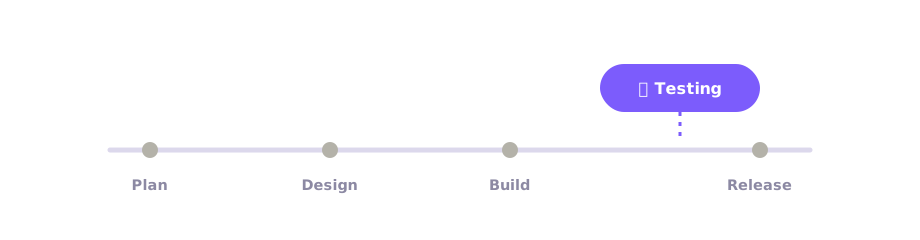
"Shift left" has been a conference slogan for a decade, yet in most organisations testing still starts when development ends. The reason is simple: every proposed version of shifting left asked developers to do more work. The version that sticks does the opposite.
Test design before code exists
The highest-leverage shift is generating test cases from the requirement, before a line of code is written. It costs minutes with AI generation, and it changes the conversation: developers read the test cases alongside the story and discover ambiguities while they're still cheap. Half the value of early testing is finding requirement bugs, which outnumber code bugs and cost more.
Make the pipeline the tester
Quality gates work when they're automatic and fast. Smoke on every pull request, regression nightly, results posted where developers already look. A developer who gets test feedback in eight minutes treats it like a compiler; one who gets it in three days treats it like an audit.
What QA does in a shifted world
Quality engineers move from executing checks to designing the system of quality: curating generated suites, reading coverage and flake analytics, doing the exploratory testing automation can't. It's a more senior job, and the teams that frame it that way retain their best testers instead of losing them to the shift.
Start with one squad
Pick one team, apply requirement-time test generation plus PR-time smoke for one quarter, and measure escaped defects against a control squad. The numbers make the argument organisation-wide better than any mandate.
See This in Practice
Bring a real requirement to a TestPlus demo and watch the workflow run end to end.