
The Time-to-Automation Playbook: Days, Not Sprints
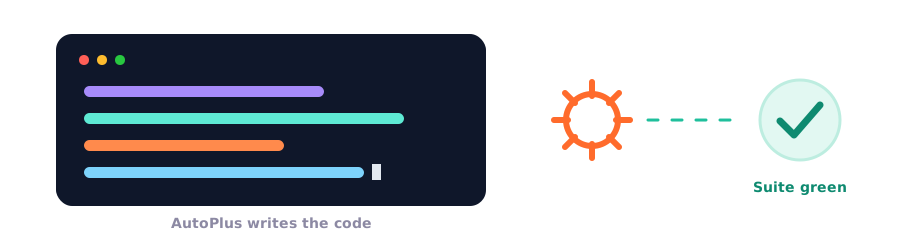
Most automation initiatives die the same death: a grand rewrite plan, three sprints of framework-building, zero tests automated, and a quietly abandoned epic. The teams that succeed do the opposite — they automate in days, in slices, while delivery continues.
Day 1–2: pick the boring suite
Don't start with your hardest flow. Start with the suite your testers resent most — usually smoke or a stable regression pack. Stability matters more than importance: automating a UI that changes weekly teaches your team that automation breaks, which is the wrong first lesson.
Day 3–5: generate, don't scaffold
With AutoPlus, approved test cases become runnable code with page objects and test data scaffolding included. The job of your automation engineer shifts from writing boilerplate to reviewing generated code — checking locator strategy, extracting shared steps, wiring real test data. One engineer can review and harden 20–40 generated tests a day; nobody writes that many from scratch.
Week 2: wire the pipeline
Connect the suite to CI — on pull requests for smoke, nightly for regression. Results must flow back to the test cases automatically; if engineers have to look in two places, they'll look in neither. This is also when self-healing earns its keep: UI churn that would have produced a morning of red becomes a heal log to skim.
Week 3 and beyond: expand by risk
Now automate by defect history, not by module order. Pull the areas with the most escaped bugs forward. Keep manual exploratory testing for what humans do best — and let the suite absorb everything repeatable.
Teams running this playbook typically reach 60–70% regression automation within a quarter, with the first green CI suite inside week one. The trick was never technical — it's refusing to build cathedrals before automating a single test.
See This in Practice
Bring a real requirement to a TestPlus demo and watch the workflow run end to end.