
End-to-End Traceability Without the Spreadsheet Pain
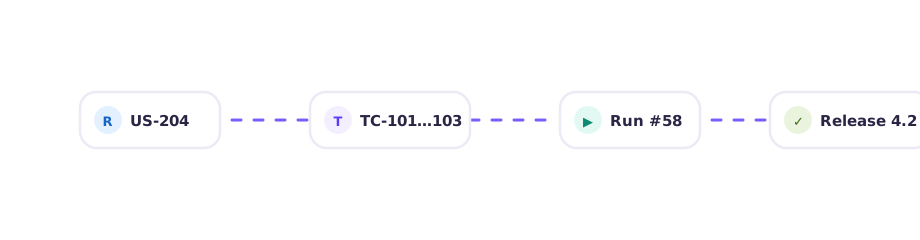
Ask a team for their traceability matrix and you'll usually get a spreadsheet last updated two releases ago, maintained by someone who has since changed jobs. Traceability fails not because teams don't care, but because manual link maintenance is a tax nobody can keep paying.
Links must be a by-product, not a chore
The only traceability that survives is the kind created automatically by the workflow itself. When a test case is generated from a Jira story, the link exists from birth. When a run executes that test, the run links itself. When a failure raises a defect, the defect carries the chain. Nobody ever "updates the matrix" — the matrix is just a view over what happened.
What the chain buys you
Three things, concretely. Coverage gaps surface instantly: a changed requirement with no linked passing test shows up the moment the requirement changes, not at the release meeting. Impact analysis becomes a query: "what breaks if we change checkout?" is answered by following links, not by asking the longest-tenured engineer. Audits stop being archaeology: for regulated teams, proving that requirement X was verified by run Y on date Z is an export, not a week of reconstruction.
Getting there from spreadsheet-land
Don't backfill history — start the chain from today. Connect your tracker, generate or import tests against current stories, and let two or three sprints of normal work build the graph. Retroactive perfection is a trap; forward automation is a habit.
See This in Practice
Bring a real requirement to a TestPlus demo and watch the workflow run end to end.