


 Mar 31,2025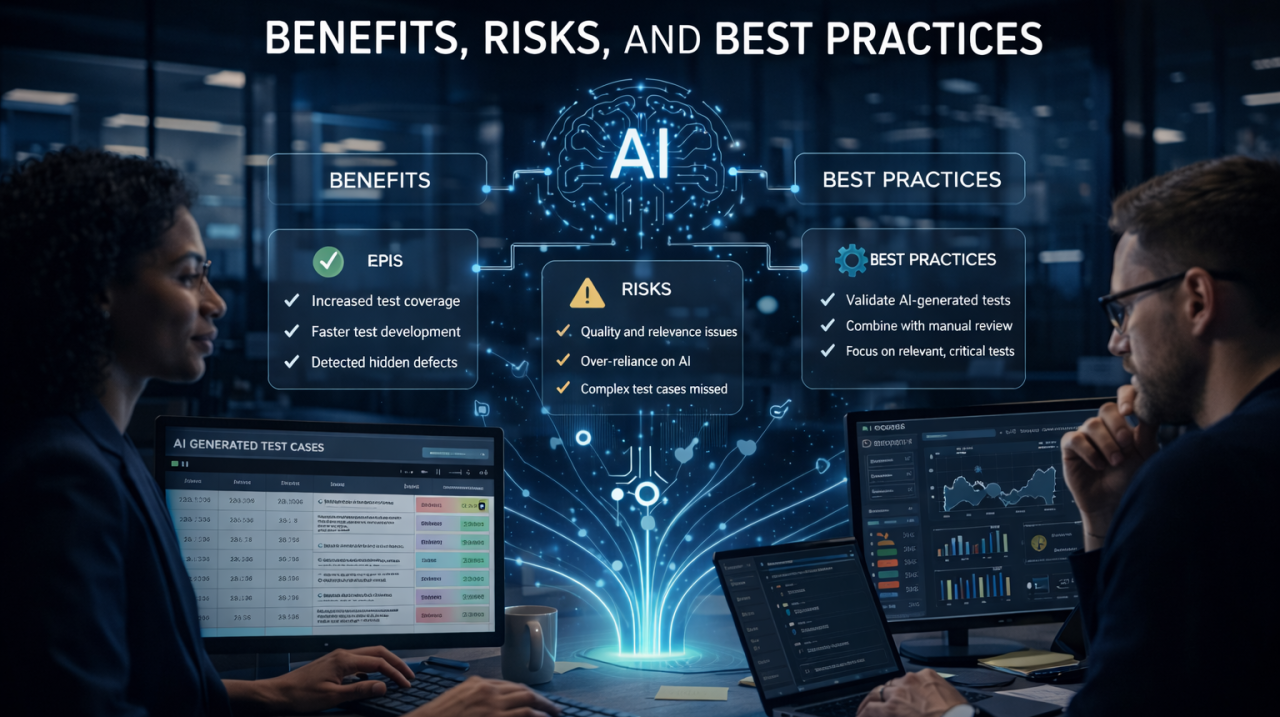
AI-generated test cases are one of the most talked-about applications of AI in quality engineering – and for good reason. Converting requirements into structured test scenarios has always been time-consuming. It requires interpretation, domain knowledge, clarity of acceptance criteria, and careful attention to edge cases. AI now offers a way to accelerate that process.
The biggest advantage of AI-generated test cases is that they reduce blank-page effort. When a tester receives a new requirement, AI can quickly suggest positive flows, negative cases, validations, dependencies, and possible boundary conditions. This helps teams move faster at the start of the testing cycle and ensures basic coverage is not missed because of time pressure.
AI is particularly strong when dealing with structured inputs. Clear user stories, requirements documents, API contracts, workflow descriptions, and product specifications can all be translated into candidate test cases. In organizations with consistent documentation, this becomes a major productivity gain.
However, there are real risks. AI is only as good as the information it receives. If requirements are vague, contradictory, incomplete, or missing business context, the generated test cases may look polished while still being shallow or misleading. False confidence is worse than visible uncertainty.
Another risk is generic coverage. AI often produces good baseline scenarios but may miss domain-specific nuances, hidden dependencies, or business-critical edge cases that experienced testers know from history. Human review remains essential, especially in regulated or complex domains.
So how should teams use AI-generated test cases effectively? First, treat AI output as a starting point, not a finished artifact. The first draft should be reviewed by someone who understands the product area and its risks. Second, use templates and structure. If you want consistent output, give AI a consistent format – such as preconditions, steps, test data, expected results, and priority.
Third, connect generation to context. AI performs better when it has access not just to the current requirement, but also to related documentation, historical defects, existing test libraries, and domain terminology. Fourth, apply risk-based review. Not every generated test case needs the same level of scrutiny.
The best use of AI-generated test cases is not to replace testers but to expand their capacity. Instead of spending hours drafting repetitive validations, testers can focus on gap analysis, exploratory design, integration risks, and high-impact scenarios.
As software delivery becomes faster and more complex, AI-generated test cases will become more common. The teams that benefit most will not be the ones that trust AI blindly. They will be the ones that combine AI speed with strong review discipline.
If your team is exploring AI-generated test cases, start with a narrow workflow, define a review standard, and compare the output against your existing manual process.